
Health & Safety Signs Regulations Ireland
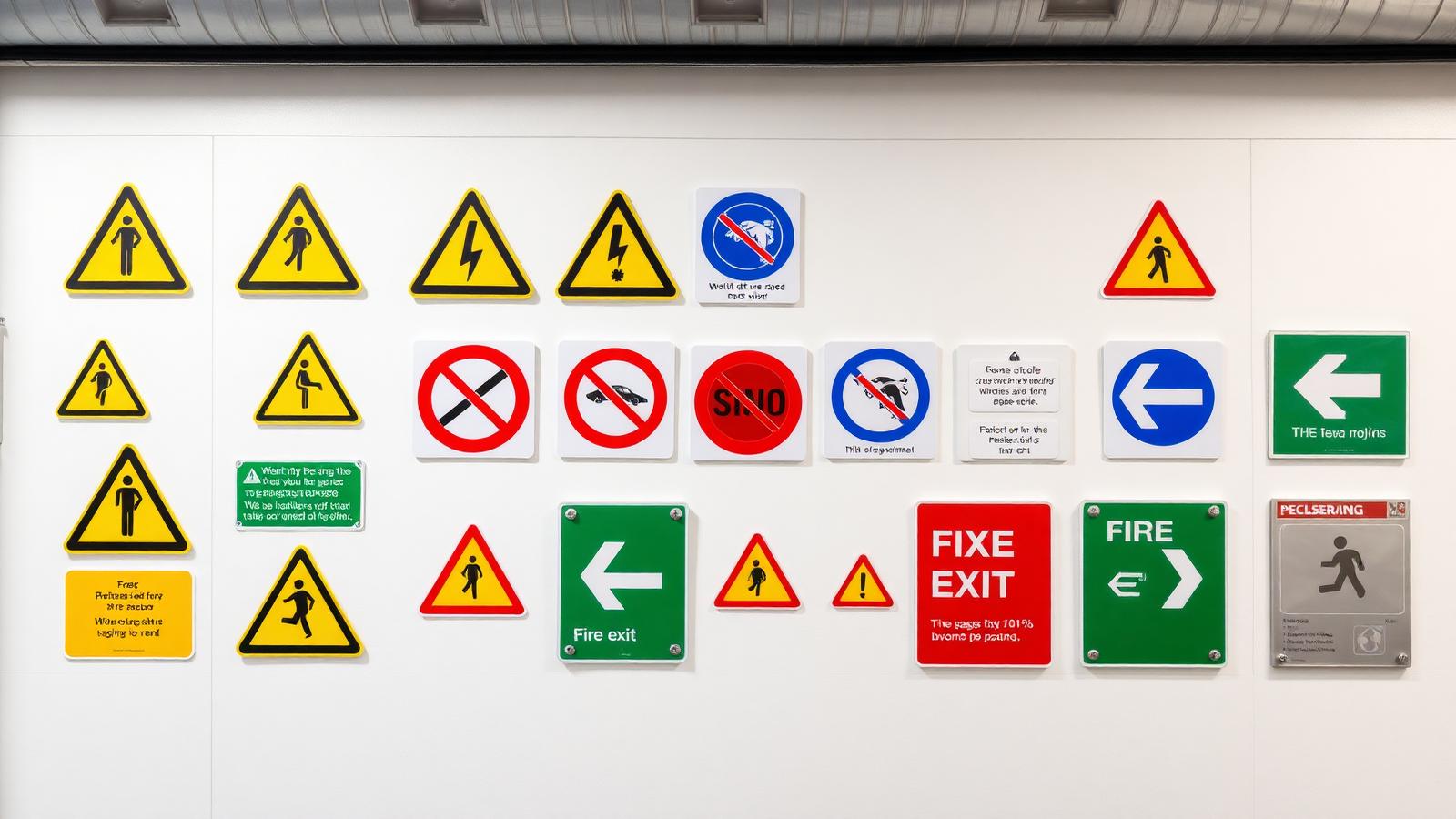
Irish workplaces must comply with the Safety, Health and Welfare at Work (General Application) Regulations 2007 when it comes to safety signage. This plain-English guide explains what the law requires, who is responsible and how to meet it.
The five sign categories
The regulations recognise five categories of safety sign by colour and shape: prohibition (red circle), warning (yellow triangle), mandatory (blue circle), emergency/safe condition (green square) and fire-fighting (red square).
Risk assessment first
The Health and Safety Authority (HSA) is clear that signs are a last line of defence - you must first try to eliminate, substitute or engineer out the hazard. Signs are then used to control the residual risk.
Maintenance and visibility
Signs must be kept clean, legible and unobstructed. Faded, damaged or obscured signs are non-compliant and should be replaced - a service Safety Sign Centre offers nationwide.
Sources & further reading
Health and Safety Authority (hsa.ie), Safety Health and Welfare at Work Act 2005, EU Directive 92/58/EEC, ISO 7010:2019.
Frequently asked questions
+What law covers safety signs in Ireland?
The Safety, Health and Welfare at Work Act 2005 and the Safety, Health and Welfare at Work (General Application) Regulations 2007 - specifically Chapter 1 of Part 7 (Safety Signs at Places of Work).
+Do I have to use ISO 7010 pictograms?
Irish regulations require the pictograms set out in EU Directive 92/58/EEC. ISO 7010 has become the de-facto standard set and is accepted by the Health and Safety Authority (HSA).
+Who is responsible for safety signage?
The employer (or person in control of the workplace) is responsible for identifying where signs are needed via risk assessment and for installing and maintaining them.